


I watched a video recently where Pete from ‘Green Dreams’ (Florida, USA) walks through what is essentially a home-scale food forest that behaves like a miniature production system.
This got me thinking.
There is a certain kind of agricultural optimism you can only feel when you stand inside a living system that is clearly thriving. And not because it looks tidy. But actually because it looks busy. Purposefully busy. Like every plant is doing a job.
The biggest constraint? Not theory. Rather, time, labour, maintenance. The reality of keeping the system coherent and in check when all it wants to do is explode into abundance. That’s the tension.
Syntropic agriculture, at its best, is a choreography of succession and structure.1
Commercial farming, at its best, is a choreography of logistics and repeatability.2
So the real question is not whether the syntropic approach works, but whether a system like that can be managed at scale, for profit.
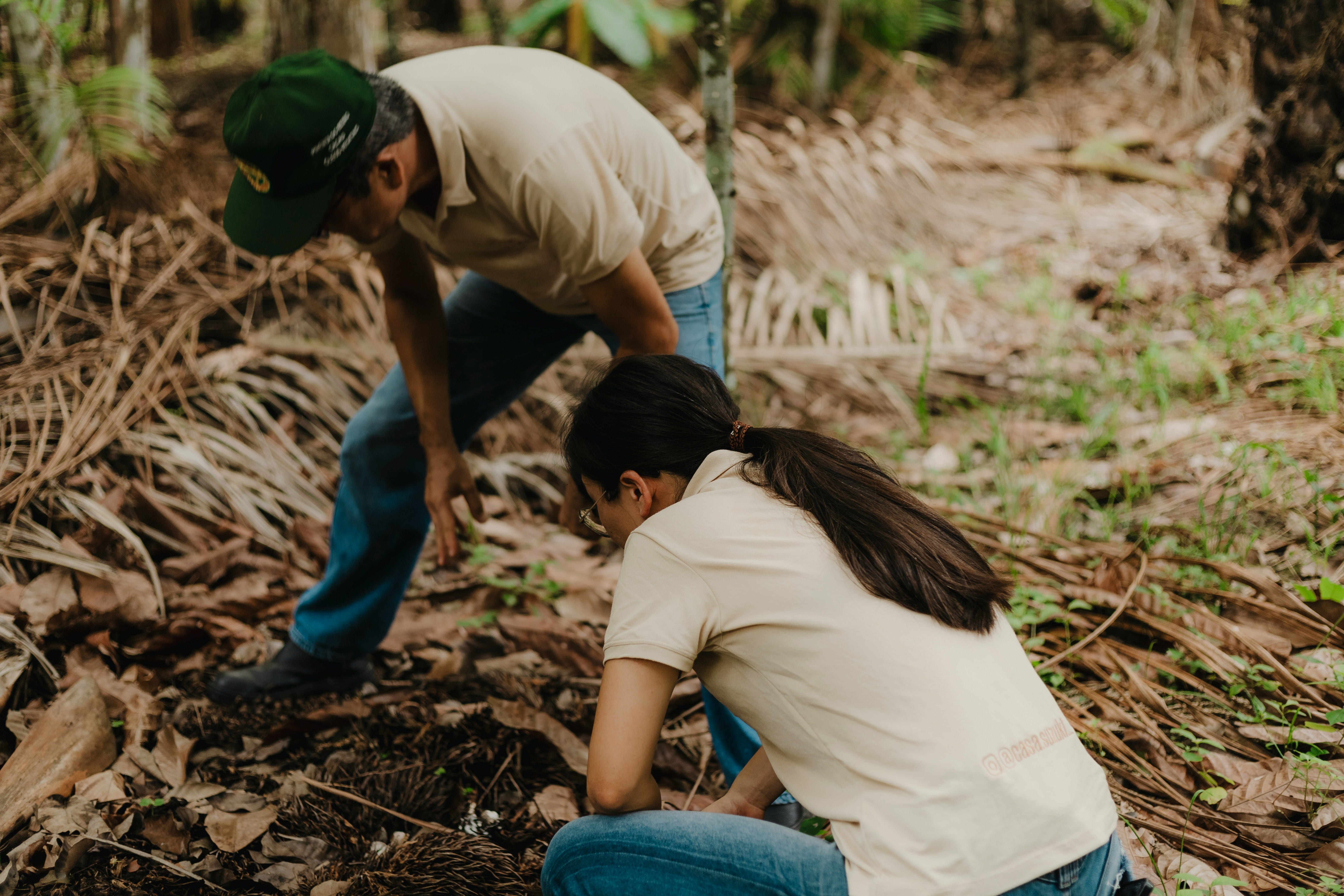


What syntropic agriculture is actually trying to do
Syntropic farming systems are often described as “a unique form of agroforestry inspired by natural forests, built around succession over time and vertical stratification in space.”
A deliberate combination of annuals and perennials, relying on active management (especially pruning and biomass cycling) to steer the system.
Most introductions to syntropy repeat the same core logic:
Build fertility in place by creating and then cycling biomass.
Use dense planting and functional diversity to outcompete weeds and stabilise the microclimate.
Manage the ‘growth pulse’3 through pruning, disturbance, and succession timing
Design for layered production (ground-cover, shrubs, understory, canopy) rather than single-layer monoculture.
That core logic framing matters.
It immediately tells you why syntropy feels non-commercial to many conventional producers.
It’s not input-driven by definition.
It’s process-driven.
Processes are harder to scale than products.
Why commercial farmers instinctively resist it
Commercial farming is built around a few non-negotiable attributes:
Speed.
Access.
Uniformity.
Predictability.
Corroboration.
Not because farmers are unimaginative, but because margins are thin and risk is expensive.
Syntropic systems often look like the opposite:
A lot of human judgement.
Continuous change.
Complex access.
Dense biomass.
Heterogeneity.
If you’ve ever tried to manage field operations across a large orchard, you already know the cost of complexity.
A beautiful system that breaks your spray programme, blocks machinery, slows scouting, confuses teams, or introduces harvest chaos is not “regenerative”.
It’s just plain expensive.
This is where the debate usually gets stuck.
It’s where the conversation really piques my interest.
One side romanticises syntropy as nature’s cheat code.
The other dismisses it as a boutique ideology.
Both miss the point.
The opportunity is to borrow the operating principles of syntropic food forestry, then engineer for scale.
Where syntropy can create real commercial value
There are three places syntropic ideas can make hard-nosed business sense in perennial commercial setups:
1. Soil cover and moisture buffering as a yield insurance policy
Dense organic cover and intentional living ground-covers protect the soil from drying out and help buffer volatility. Dense organic matter shades the soil so it can hold more water.4 That’s not philosophy. That’s physics.5
2. Biomass as the missing input line-item
If you can grow your mulch, you reduce reliance on imported amendments. Literature on syntropic systems emphasises big time that active management is central. The design and the management are what create the outcomes.
3. Edge effects and microclimates in high-value blocks
Windbreaks, shade modulation, stratification, and multi-species shelter can be deployed surgically, not ideologically. Think: frost pockets, heat stress zones, erosion slopes, weak soil bands.
The commercial version of syntropy is not about creating a random jungle.
It’s targeted complexity, where complexity lands up paying off.
The scaling problem is not biology; it’s y all about management
Here is the part that matters most for commercial operations.
Syntropic systems generate two things at once:
A biological asset (soil function, resilience, diversified production)
A management burden (labour, timing, access, measurement complexity)
If you cannot measure the system, you cannot steer it.
If you cannot steer it, you cannot scale it.
This is where most syntropic discussions go soft. They talk about principles. They don’t talk about operational control.
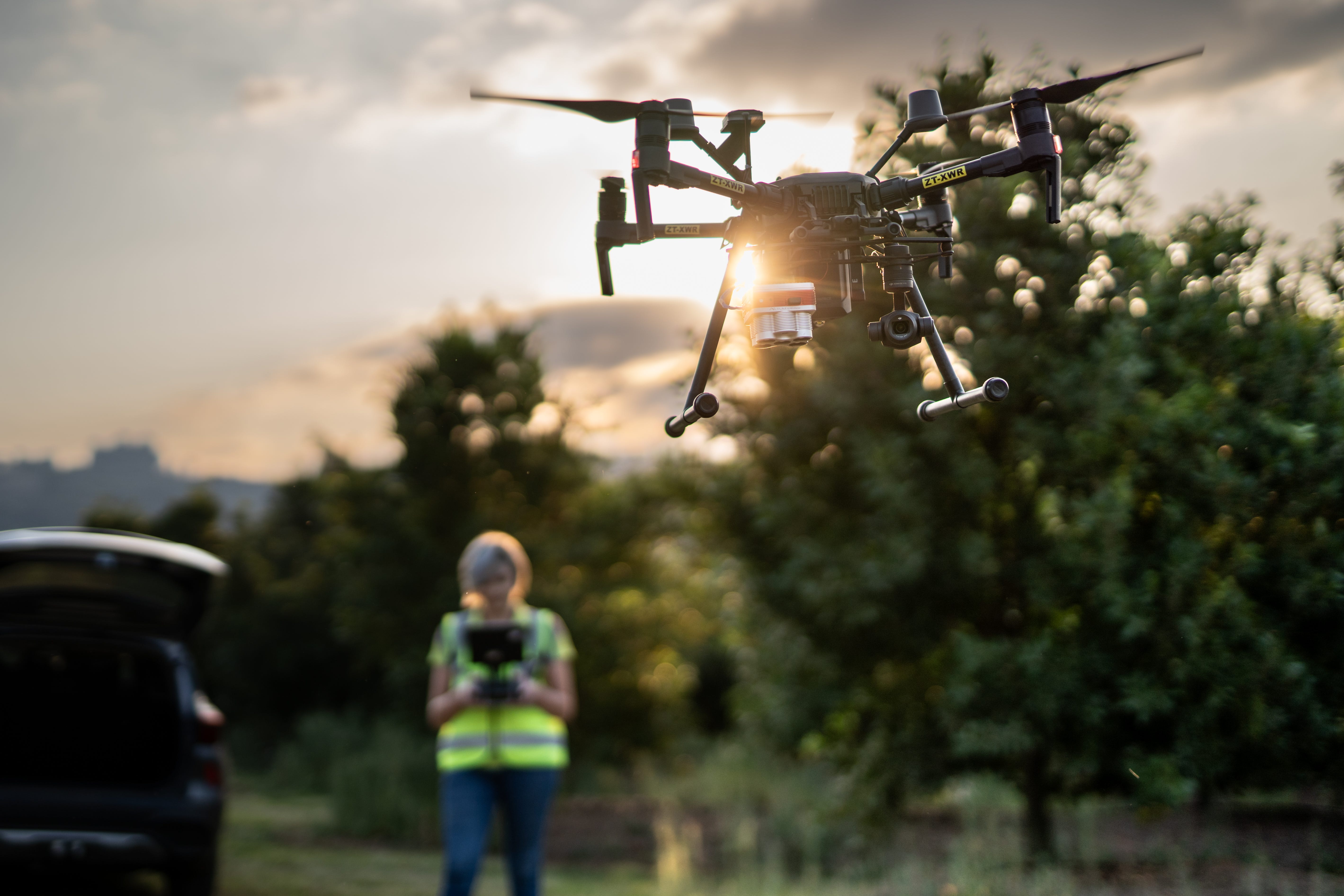
Could drone mapping be the bridge between syntropy and scale?
If syntropic agriculture is a living, moving target, then you need a monitoring system that is frequent, spatial, comparable over time, and usable by teams.
That is exactly what drone mapping is good at.
Not drones as a novelty.
Drones as an operating layer.
Below is a practical case for how drone-derived data could help commercial farmers manage syntropic or syntropic-inspired systems without sacrificing control.
Build a baseline; map the system you actually have
Start with an orthomosaic (RGB) so you have a shared map. In syntropic systems, people often underestimate how quickly structure changes. A baseline turns “it feels denser” into measured change.
Monitor functional vegetation, not only “green-ness”
Multispectral indices let you monitor plant condition at scale, beyond what the eye can reliably track.
Practical interpretation, in the field:
NDVI is useful for early establishment, smaller plants, and lower biomass zones
NDRE is stronger for denser canopy conditions and can detect stress patterns earlier in mature trees, where NDVI can saturate
In mixed, multi-layer plantings, this matters because you are not managing one canopy. You are managing layers.
While per-plant metrics are likely out of the question as the system matures past the first few years (sometimes months), the multispectral map layers will be the go-to and will still hold value - much in the same way (but at higher resolution) that satellite NDVI maps display current status or changes over time in a visual way.
Detect change over time; keep succession intentional
Syntropy involves succession by design.
That means the KPI is not one snapshot. It’s trajectory.
Run the same flight plan repeatedly at key stages and compare:
canopy (vegetative mass) expansion or contraction
stress patterns shifting after pruning events
competition zones where one layer is suppressing another
the areas that are becoming unmanageable
This is how you keep planned succession from becoming unplanned entropy.
Turn complexity into tasks (coordinating human effort)
Syntropic systems fail when everything becomes hand-crafted.6
What do I mean by “hand-crafted”?
A system becomes hand-crafted when every decision and action depends on someone’s constant judgement, presence, and manual labour, instead of being:
repeatable (standard operating procedure),
schedulable (clear timing windows),
assignable (any trained team member can execute),
and verifiable (you can check outcomes objectively).
Syntropic blocks introduce more species, more layers, more timing-sensitive interventions, and more “micro-decisions” (pruning, thinning, chop-and-drop, access clearing, replanting, managing competition).
If those tasks aren’t operationalised via a system protocol, you get: Labour blowouts (too many hours per hectare), Timing drift (pruning and biomass cycling happen late or inconsistently), Patchiness (some rows are managed well; others become chaos), Access degradation (lanes close up, equipment movement gets harder), Knowledge bottlenecks (only one person knows what “should” happen next).
Drone layers allow you to:
flag zones for pruning, chop-and-drop, replanting, or thinning
assign tasks with a map, not a description
verify whether the intervention worked in the next flight cycle
This is the same operational logic used in commercial orchard management. Identify underperformance, prioritise, act, then re-measure.
“Syntropic systems struggle at scale when management stays artisanal. They need repeatable routines, clear thresholds, and mapped tasking, otherwise labour and timing become the limiting factors.”
Make sampling smarter; stop guessing where to measure
Dense diversified systems create sampling bias. People naturally sample what is easiest to reach or what looks most dramatic.
A smarter approach is to use variability maps to choose representative sampling locations. It saves time and improves decision quality. In syntropic blocks, this becomes even more valuable because variability is the rule, not the exception.
Quantify access and operability
One of the biggest unspoken costs in syntropic plantings is access. Drones can help you measure: corridor widths, biomass creep into lanes. pinch points where machinery will struggle, and zones where density has become operational friction
This is the difference between a system that survives as a showcase and one that survives as a business unit.
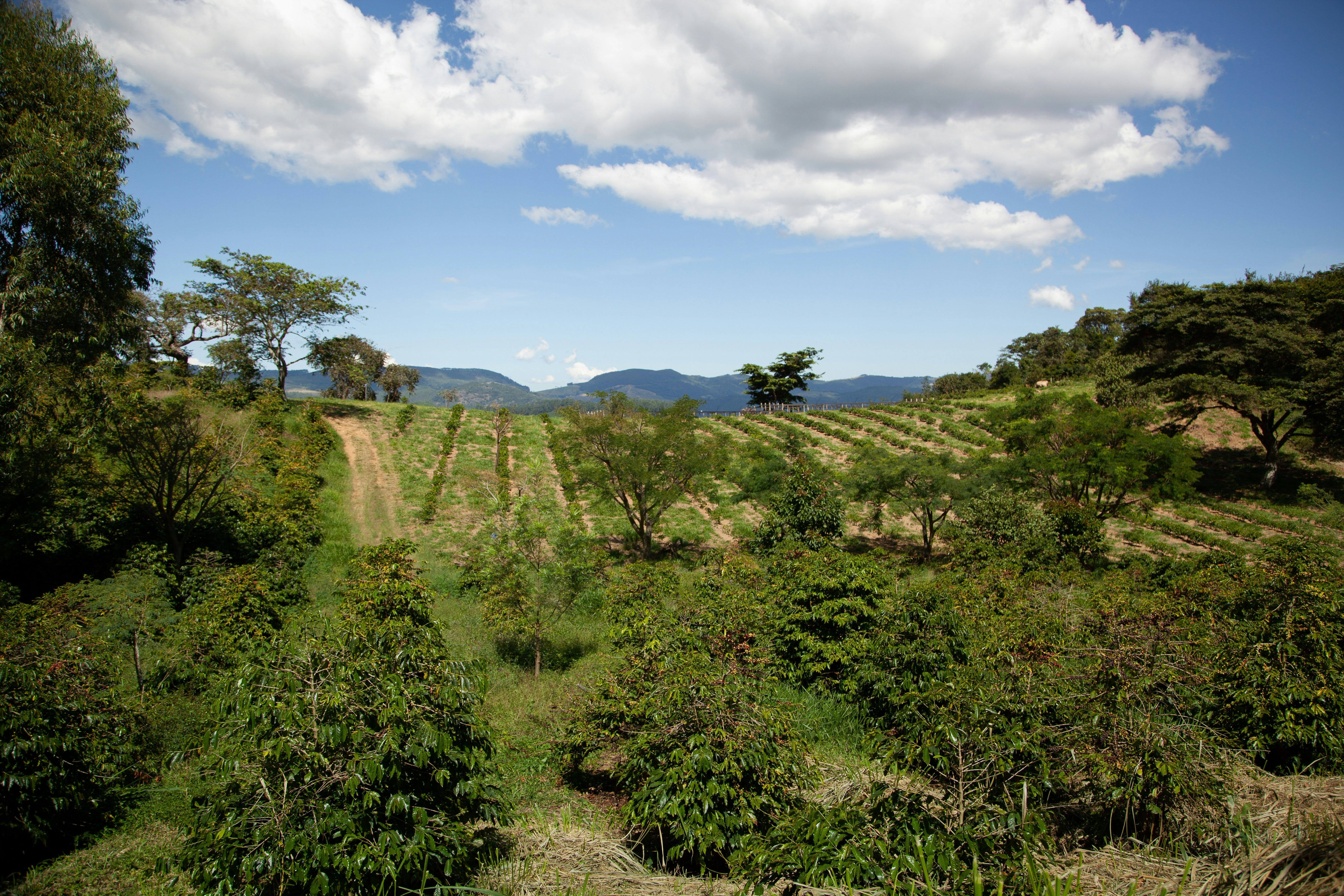


A commercial-friendly way to start: syntropic-lite with some data discipline
If a large operation asked me where to begin, I would not tell them to convert whole farms.
I would say:
Pick one block.
Pick one objective.
Measure everything.
A sensible pilot project could look like this:
Choose a high-cost problem zone (erosion slope, weak soil band, frost pocket, heat stress edge, whatever)
Design a layered intervention (cover crop + biomass species + primary crop support strategy)
Define access rules upfront (lane widths, turning space, pruning windows)
Fly quarterly during establishment, then at key phenology points: twice a season
Use NDVI and NDRE intentionally, based on canopy density and the decision you are trying to support. RGB maps too for a trajectory visual aid.
Run a simple loop: detect; prioritise; act; verify; repeat
When you do it this way, syntropy is not a leap of faith.
It is a planned experiment.
So, chaos or harmony?
Both outcomes are possible.
If you import syntropy as a trend (or a philosophy without a plan) it will collide with commercial realities and turn into complete chaos.
If you translate syntropy into operating principles, then apply measurement, access design, and disciplined management, it can merge into something closer to harmony.
Not perfect harmony. Working harmony. The kind that pays.
Where on your farm would targeted complexity pay back first: soil, water, pest pressure, or labour efficiency?
The thinking starts here, but the real change starts when we take action.
Thanks for reading,
Ken
Get my latest book here:
https://linktr.ee/KenTreloarDroneBook
Syntropic agriculture (also called syntropic farming systems) is a form of agroforestry that designs and manages diversified plantings to mimic natural forest dynamics in space and time, using species succession and vertical stratification (layers) to build biomass, regenerate soil, and maintain productivity through active management (often including pruning and mulching).
Commercial farming (also called commercial agriculture) is farming where crops and/or livestock are produced primarily for sale in markets (rather than mainly for the farmer’s own household consumption), typically organised as a business activity.
A growth pulse is a discrete, time-bounded episode of accelerated growth (e.g., shoot elongation, leaf production, or cambial/radial growth) that is separated by periods of slower growth or quiescence. In practice, it shows up as a distinct “flush” or peak in growth rate, often triggered by a favourable resource window (rainfall, temperature, nutrients), or by a disturbance [planned or otherwise] that reallocates resources and light.
FAO states that the most effective solution to high evaporation losses of soil water is a cover of plant residues on the soil surface, and that shading/cover reduces evaporation losses.
Frontiers in Agronomy review explaining that mulching preserves soil moisture largely by minimising soil evaporation, improves water retention, and buffers soil conditions.